Posted by: Dr. Grover B. Proctor, Jr. | 21 October 2013

Low Prices Truly ARE Guaranteed, It Seems


I heard about Walmart’s “Low Price Guarantee,” and I wondered if their prices are truly lower — and if so, by how much. I mean, did they merely keep their prices 2 or 3 cents below that of their competitors, just so they could accurately boast of “lower prices?” Were the prices appreciably lower? Or was it just not true? I decided to find out.

So, not that long ago, I chose 25 brand name items that the Proctor household has been known to buy, and then I collected the everyday, non-sale prices charged for those items by Food Lion, Harris Teeter, Kroger, and Walmart. (All of the stores were in my small town and were within just a few miles from each other.)

My little research project provided surprising, hard-to-argue-with results. If you put those 25 items in your basket at all four stores, Walmart’s competitors’ prices were 23% to 34% higher than what you would pay at Walmart. Here’s the breakdown:
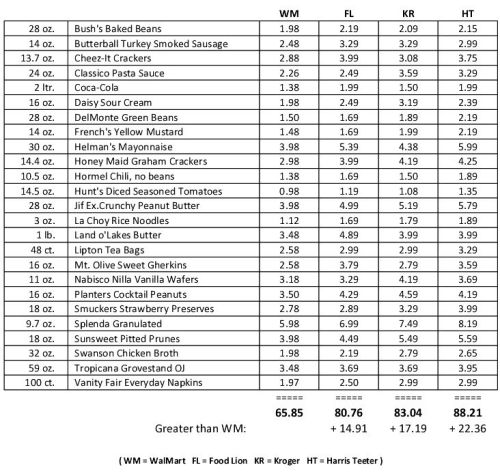
Food Price Comparisons

Here are some of the specific facts that my study revealed. First, some basic level statistical analysis on the above prices demonstrated that Walmart’s prices on these 25 items, when compared with what their competitors charged, showed that Walmart’s prices are statistically significantly lower than all three other grocery chains. (A short summary of those stats is given at the bottom of this article, for all you fellow geeks.)

None of the three other grocery stores had a lower price on any of the individual items than that charged by Walmart — though Food Lion came close on a few of them. La Choy Rice Noodles (great on salads!) is a whopping 69% higher at Harris Teeter than at Walmart (though, admittedly, that’s only 77 cents difference). For reasons I’m still not sure about, Kroger’s price is 61% higher than Walmart’s for Daisy Sour Cream. Prices were closest among the four stores on two items: Bush’s Baked Beans and Tropicana Grovestand Orange Juice. (Walmart was 8% cheaper on average for both of those.)

Okay, okay. I know that some of you have decided to boycott Walmart for political, labor practice, or socioeconomic reasons, and the above facts will not dislodge you from your principles. It was never my intention to do that anyway.

But, my goodness. The prices truly are lower, and very significantly so! I plan to re-visit the 25 items at these grocers in a few months, to see if things have changed. I’ll post those results here also.


Statistical Analysis

H0: There is no price difference between grocery store A and grocery store B.
HA: There is a price difference between grocery store A and grocery store B.

Results from the Paired Samples t-Test (alpha = 0.05):
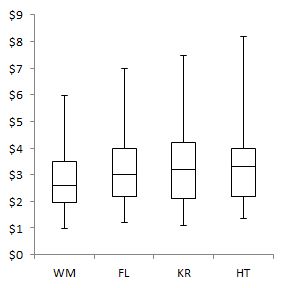
Box & Whisker plot(1) Results comparing Food Lion (total=80.76) and Walmart (total=65.85) showed a statistically significant difference in prices of identical items (p=.000). Therefore, the null hypothesis is rejected.

(2) Results comparing Kroger (total=83.04) and Walmart (total=65.85) showed a statistically significant difference in prices of identical items (p=.000). Therefore, the null hypothesis is rejected.

(3) Results comparing Harris Teeter (total=88.21) and Walmart (total=65.85) showed a statistically significant difference in prices of identical items (p=.000). Therefore, the null hypothesis is rejected.
 

Posted by: Dr. Grover B. Proctor, Jr. | 14 October 2013

My Mother’s Hymn


Ruth H. Proctor and William V. Wallace

Ruth H. Proctor and William V. Wallace

I don’t know the exact year, but when my mother was in her early 30’s, she wrote a three-stanza poem that began “Dear Father, hear the prayer.” She set it to the popular 100-year-old hymn tune known as “Serenity,” based on the music of 19th-century Irish-born composer William V. Wallace. (See their pictures at right.) It was in this form that her hymn was published, and those of you who were able to attend Mother’s funeral honored her by singing it.

I have been going through her papers, and this week I discovered a 1999 note she had written (but never sent) to my wife Adrianne, in which she asked Adrianne to call her some day and (over the phone from Michigan) to play the hymn for her on the piano. In that note, I learned for the first time that Mother had given it a formal title, the “Western Boulevard Presbyterian Church Prayer.” I have prepared an edition of it, below, reflecting that title.

Mother was very active in that church in Raleigh, NC, as a participant and leader in the ladies’ Circles, serving as occasional organist and, when not at the keyboard, singing in the choir beside me (I was a boy soprano). We were members there (and the poem was written) while the pastors were Dr. Robert Bluford (1951-1957) and Rev. Russell Fleming (1958-1970). After my father’s death, Mother married my step-father there in 1985. Western Boulevard Presbyterian Church Prayer by Proctor/Wallace

(Click on the music above to view/download a .PDF of the hymn.)

Songs by William Vincent WallaceThe hymn’s music began its life as a love ballad titled The winds that waft my sighs to thee for soprano and piano by composer William Vincent Wallace, to words provided by poet H. W. Challis. (See full text at bottom.) So popular did the song become that it was included in the 1895 volume The Good Old Songs We Used to Sing, is part of a new CD just released last month of the songs of W. V. Wallace, and even merited an allusion in James Joyce’s very profane Ulysses. I confess I have never read Ulysses, nor do I ever intend to. But my research for this article revealed that, so vulgar and obscene is the context in which Joyce inserted the song’s title, Wallace would almost certainly not have wanted that particular accolade!

In 1856 the song’s melody (originally written in the unusual 9/8 meter) was arranged by Uzziah Christopher Burnap into the hymn form we know today. The melody changed meter from 9/8 to 3/4 and the rhythm was somewhat altered, but the lyrical support for the 8-6-8-6 iambic form (“ta-DA ta-DA ta-DA,” etc.) was cemented. Several hymn settings have been made over the years with Burnap’s arrangement, including ones using poems by writers as diverse as Bernard of Clairvaus (“O Jesus, King most wonderful”), John Greenleaf Whittier (“Immortal love, forever full”), and Mary Baker Eddy (“Blest Christmas morn”). Though being on such a list was never a part of Mother’s motivation, nevertheless, how wonderful that she is there!


The song’s original lyrics, written by H. W. Challis:

The winds that waft my sighs to thee,
And o’er thy tresses steal;
Oh! let them tell a tale for me,
My lips dare not reveal!

And as they murmur soft and clear
The love I would impart;
Believe the whispers thou dost hear
Are breathings of my heart.

Yet if perchance their mission fail
Thy coldness to remove,
And night winds with their plaintive wail
Bring back my prefere’d love!

Then think, whene’er thou look’st on high
And see’st the light depart;
Those clouds, storm driven o’er the sky,
Are shadows of my heart.

What may be the first recording ever of the original Wallace song was released in America in January 2014. (See album cover above.) You can hear the original song in the video below.


* * * * * *

Posted by: Dr. Grover B. Proctor, Jr. | 30 September 2013

A 9-Voice Solo? Well, yes…


Sam Robson

Sam Robson (x3)

My 62 years on this earth has taught me that there are an amazing number of exceptionally talented people out there, and that I am generally in total awe of them. Here is yet another such person I have just recently had the great fortune to discover.

A high school friend of mine — who, himself, was just honored by being inducted into the Silver Circle of the National Academy of Television Arts and Sciences for his career of superior work; congrats, Paul! — introduced me to the talents of Sam Robson. In case you haven’t heard him, or heard of him (and I hadn’t), Robson is a London, England-based singer/arranger/harmonist/ videographer who has filmed extraordinary multi-track, one-man-ensemble performances of himself singing songs of praise and worship.

For someone who is quiet about himself and his personal life, his music has attracted him quite a few fans. On Facebook he has 3,000 friends, and on Youtube (his repository for his HD-quality videos) he has over 10,000 subscribers. His current project is a collection of standard familiar hymns, done in his inimitable acapella style.

As of this writing, he has five performance videos completed and posted online. He promises more, as the ultimate goal is an entire CD of hymns. (Adrianne asked, “How about a DVD?!”) The harmonies are close, the performances are spot-on, and the production is extremely tight. I don’t need to say much more, because once you hear him, I predict you’ll be as amazed and joyful (and perhaps joyfully tearful) as I was. Below are his current five videos. There’s a poll at the bottom; please vote and let me know how you felt about this music!

I strongly suggest that you use headphones to get the fullest high fidelity!

 
“I Need Thee Every Hour”

(I have listened to this one over a dozen times today alone.)

 
“How Great Thou Art”

(This was one of my mother’s absolute favorite songs of worship, and she would have been in tears by the end of this performance.)

 
“Be Thou My Vision”

 
“O Love That Will Not Let Me Go”

(This is Robson’s most recent post, from just 3 weeks ago, which he describes as having “a softer approach to the singing” with “a jazzier arrangement.”)

 
“It Is Well With My Soul”

Enjoy Robson’s (and your own) praise of God in these wonderful performances!

Posted by: Dr. Grover B. Proctor, Jr. | 13 August 2013

The Dot and the Line


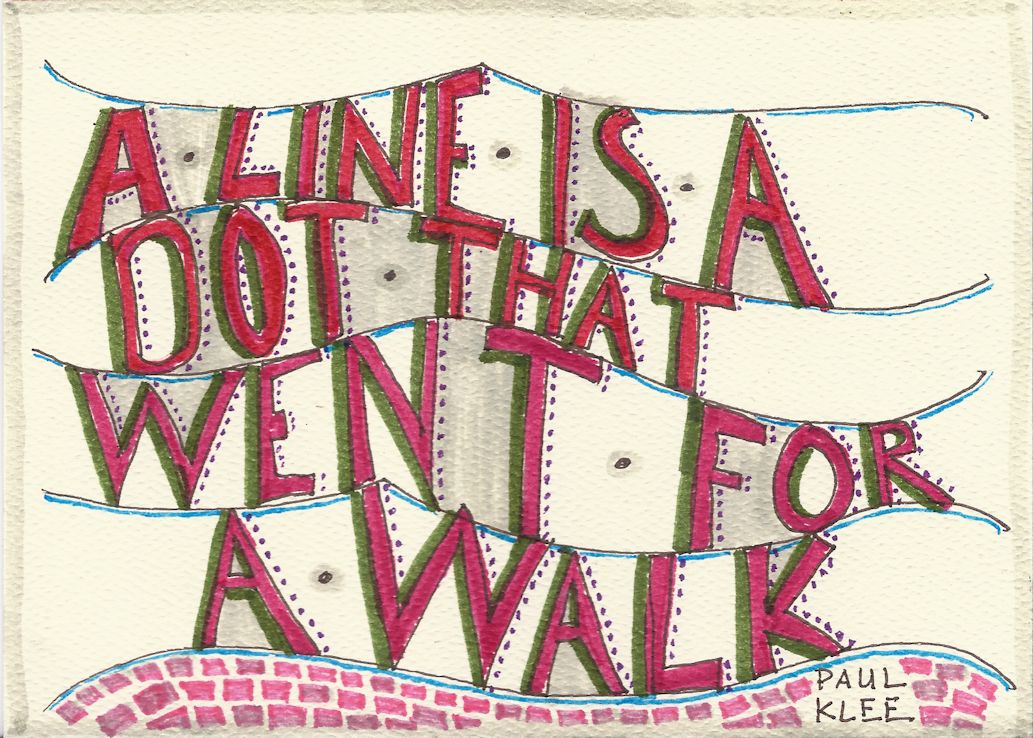
Many of our family and friends have asked when they could see more of Adrianne’s calligraphy.

Well, I was so taken with a piece she recently did, using a quote from artist Paul Klee, that I asked her for permission to scan it in high resolution and share it widely. I was most pleased that she agreed!

So here it is. (You may click on the image below to see a higher resolution version.) Hope you enjoy its delightful whimsy as much as I do.

'A line is a dot that went for a walk.' --Paul Klee

(Adrianne Proctor, with inspiration from artist and friend Deb Averitt.)


Posted by: Dr. Grover B. Proctor, Jr. | 24 April 2013

Introverts of the World…


Quiet by Susan Cain
I have just today been introduced to the work of author Susan Cain, surrounding her 2012 New York Times bestselling book titled Quiet: The Power of Introverts in a World That Can’t Stop Talking. And I find myself keenly and inevitably drawn to it, as I identify so completely with the type of person she describes.

You may well already know of her work, but in any event let me draw your attention to two things (in addition to her book itself). First, there’s her 19-minute TED talk, which is well worth the time, and which was included in Bill Gates’ list of his favorite TED talks:


And then after hearing that, I suggest you’d find Manifesto (subtitled “16 Things I Believe”) a thought-provoking follow up:   Manifesto: The Power of Introverts
 
 
Introverts of the World, Unite!
No, wait… that won’t work.
Okay, I’m going back to my books now.
 

Posted by: Dr. Grover B. Proctor, Jr. | 7 March 2013

Jeanne & Left Brain


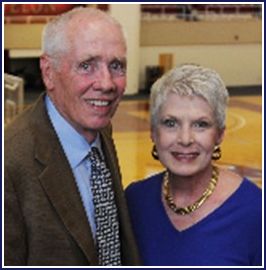
Jeanne-and-LeftBrainI absolutely adore Jeanne Robertson, a former Miss North Carolina and the state’s unofficial Comedienne Laureate, famous for her clean, original, reality-based humor.

And though I have never met him, I am keenly fond of, and sympathetic toward, “Left Brain” also! (Left Brain is her affectionate name for her husband, Jerry Robertson. The photo at left shows them both.)

I have laughed until my sides hurt at her regional-yet-universal, folksy, keenly observant, hilarious observations on life as she experiences it.

Those of you who grew up in the Tar Heel state probably already know and love Jeanne, but at the very least you’ll recognize people you know in all of her characters. For those not fortunate enough to be North Carolinians, you’ll be won over by her earnest endeavor to have us see the simultaneous folly and wisdom that surround us daily here (and everywhere).

Here is Jeanne’s classic caveat against sending a man with too many degrees to the store. Enjoy!

I’ll recommend a few other of her best bits, as immortalized on Youtube:

Here are excerpts from an homage “theme song” written for her by one of Jeanne’s “bestest friends, Harold Payne”:

She’s ’bout six-feet-two,
She’s five-feet-fourteen.
She’s not just a former Miss North Carolina
She’s still a beauty queen!

She’s gone viral on Youtube and satellite radio,
You’ll hear her Southern drawl just about everywhere you go
She’s a charmer, she’s a disarmer, she’s a lady
But just don’t ask her to bring her ukulele!

She’s not a teller of tall tales
It’s the simple truth she brings
She makes extraordinary observations
About ordinary things!

So when you seek to make your next speaking break-through,
Simply ask yourself, “What would Jeannie do?”

Posted by: Dr. Grover B. Proctor, Jr. | 22 January 2013

This just in …


Top story!

 From the Statesville, North Carolina newspaper

The Landmark

 Dateline – Tuesday, 8 October 1907

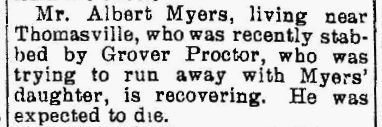
story1

Now, I’ve heard it said that my daddy was “wild” in his youth,
but I’ve got witnesses that prove that the above happened
11 years before he was even born!

I have confirmed that there was an Albert H. Myers, age 39,
living 8 miles from Thomasville, in Conrad Hill, NC, in 1907.
Living in the home was
a daughter Emma Pearl Myers, age 14.
She would marry John William Lee at age 15,
and they would have their first child a year later.

I am happy to report that Albert H. Myers
lived another 26 years after the stabbing,
passing away at the age of 65.

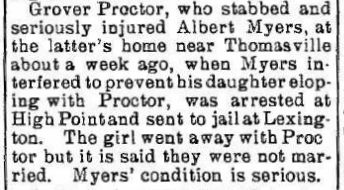
FLASH !

STOP THE PRESSES !!

This just in…

story2

No further word on the ultimate fate
of this not-so-lamented, unrelated to me (I’m pretty sure)
Grover Proctor.

—————————————–
Dr. Grover B. Proctor, Jr.
—————————————–

And now, a word from our sponsors…

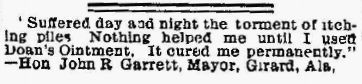
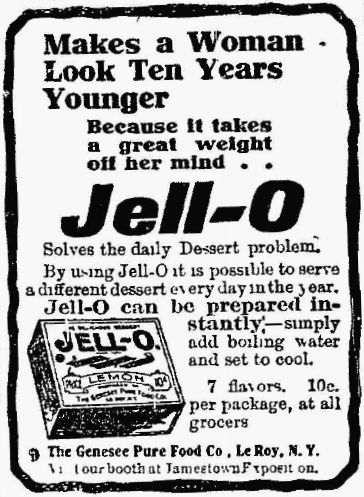
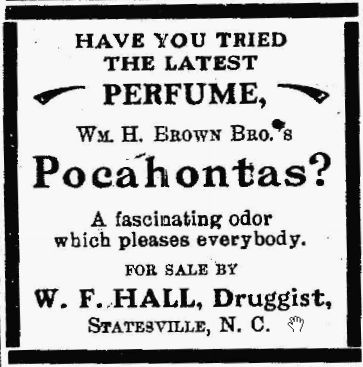
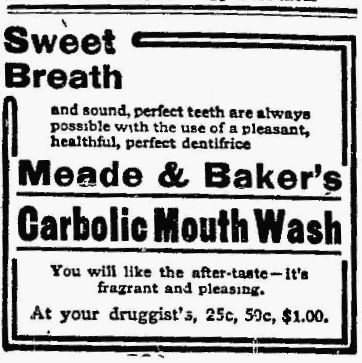
A D V E R T I S E M E N T S

ad1

ad2

ad3

ad4

ad5

ad6

Posted by: Dr. Grover B. Proctor, Jr. | 22 August 2012

2016: Obama’s America


This Friday, August 24, will mark the general wide release of the controversial new film 2016: Obama’s America. The film, written and made by author Dinesh D’Souza, takes as its mission to examine the question, “If Obama wins a second term, where will we be in 2016?”

Dr. Thomas Sowell, the noted African-American economist, wrote this week about his reactions to the film. I have reproduced his affirmative article below. Variety‘s generally favorable film review called it “a sort of Cliffs Notes précis of the conservative case against the re-election of our current U.S. president.”

The film’s website asserts, “Across the globe and in America, people in 2008 hungered for a leader who would unite and lift us from economic turmoil and war. True to America’s ideals, they invested their hope in a new kind of president, Barack Obama. What they didn’t know is that Obama is a man with a past, and in powerful ways that past defines him–who he is, how he thinks, and where he intends to take America and the world…. Love him or hate him, you don’t know him.”

Predictably, Obama die-hards and those on the Left of the political spectrum will call the film many things (hateful, racist, lies, irrelevant, etc.). After watching D’Souza’s exposition of the major points of the film at the CPAC meeting earlier this year, one of my dearest friends, whom I respect as much as any other on this earth and not someone generally found to the Left of center, called it an “absurd, unreasonable contrivance which clothes itself in reasonableness with small arguments that obfuscate the absurdity of the big picture. It also panders to the rather tiny group of malcontents who seem determined to portray Obama as someone altogether alien to American values…. D’Souza strikes me as a bit daft and not someone on whom I would like to waste the few hours, days, weeks, years I have left.”

The divergence of thought between my friend and Dr. Sowell (both men of high intellect and affluent in reason) is as fascinating as it is profound. I can feel the cognitive dissonance floating down on me like snow on cedars. I’ll leave it for you to decide.

(For those of you in central NC, it will be playing at the North Hills Cinema.)

A Powerful Movie

Dr. Thomas Sowell

2016: Obama's AmericaYears, and sometimes decades, pass between my visits to movie theaters. But I drove 30 miles to see the movie 2016, based on Dinesh D’Souza’s best-selling book, The Roots of Obama’s Rage. Where I live is so politically correct that such a movie would not even be mentioned, much less shown.
            Every seat in the theater was filled, even though there had been an earlier showing that day, and more showings were scheduled for the rest of the afternoon and evening. I had to sit on a staircase in the balcony, but it was worth it.
            The audience was riveted. You could barely hear a sound from them, or detect a movement, and certainly not smell popcorn. Yet the movie had no bombast, no violence, no sex and no spectacular visual effects.
            The documentary itself was fascinating, as Dinesh D’Souza presented the story of Barack Obama’s life and view of the world, in a very conversational sort of way, illustrating it with visits to people and places around the world that played a role in the way Obama’s ideas and beliefs evolved.
            It was refreshing to see how addressing adults as adults could be effective, in an age when so many parts of the media address the public as if they were children who need a constant whirlwind of sounds and movements to keep them interested.
            Dinesh D’Souza’s own perspective, as someone born in India who came to America and became an American, provided a special insight into the way people from the Third World often perceive or misperceive the United States and the Western world.
            That Third World perspective is Obama’s perspective, D’Souza demonstrates in this documentary, as in his book — and it is a perspective that is very foreign to that of most Americans, which may be why some believe that Obama was born elsewhere.
            D’Souza is convinced that the president was born in Hawaii, as he claims, but argues that not only Obama’s time living in Indonesia and his emotionally charged visits to his father’s home in Africa, have had a deep and impassioned effect on his thinking.
            The story of Barack Obama, however, is not just the story of how one man came to be the way he is. It is a much larger story about how millions of Americans came to vote for, and some to idolize, a man whose fundamental beliefs and values are so different from their own.
            For every person who sees Obama as somehow foreign there are many others who see him as a mainstream American political figure — and an inspiring one.
            This D’Souza attributes to Barack Obama’s great talents in rhetoric, and his ability to project an image that resonates with most Americans, however much that image may differ from, or even flatly contradict, the reality of Obama’s own ideological view of the world.

What is that ideological view?
            The Third World, or anti-colonial, view is that the rich nations have gotten rich by taking wealth from the poor nations. It is part of a much larger vision, in which the rich in general have gotten rich by taking from the poor, whether in their own country or elsewhere.
            Whatever its factual weaknesses, it is an emotionally powerful vision, to which many people have dedicated their lives, and for which some have even risked their lives. Some of these people appear in this documentary movie, as they have appeared throughout the formative phases of Barack Obama’s life.
            The Reverend Jeremiah Wright is just the most visible and vocal of a long line of such people who played crucial roles in Obama’s evolution. When Jeremiah Wright thundered about how “white folks’ greed runs a world in need,” he captured the essence of the Third World or anti-colonial vision.
            But many of the other mentors, allies, family and friends of Barack Obama over the years were of the same mindset, as this documentary demonstrates.
            More important, the movie 2016 demonstrates how so many of Obama’s actions as President of the United States, which D’Souza had predicted on the basis of his study of Obama’s background, are perfectly consistent with that ideology, however inconsistent it is with the rhetoric that gained him the highest office in the land.

Trailer for 2016: Obama’s America


Posted by: Dr. Grover B. Proctor, Jr. | 31 July 2012

Grover Goes to Hollywood


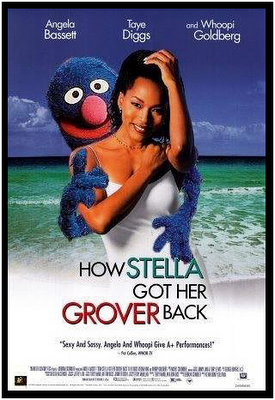
I might be wrong, but this sounds like a good movie to me! I think there may be an Oscar in its future…

How Stella Got Her Grover Back

 
(Thanks to http://superpunch.blogspot.com for the clever poster pun.)


Posted by: Dr. Grover B. Proctor, Jr. | 25 July 2012

69 Years Ago – The Sequel: The Flower Girl’s Story


This is a quick follow-up to the “69 Years Ago” story I posted earlier this month. (You might find it helpful to first read the original, which is posted here.)

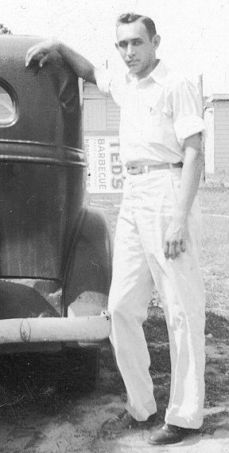
The young Grover Proctor -- "wild" ?

The young Grover Proctor — “wild” ?

Those of you lucky enough to have known my father will be amused (and perhaps as surprised as I was!) by what follows. Let’s call it, “Flower Girl: The Sequel.”

After Adrianne and I had visited with Janie Proctor (my parents’ long-lost, recently found Flower Girl) in her home for an hour or so, we took her out to one of her favorite neighborhood restaurants and continued to get to know her and share family history. By this time, the three of us had become great friends.

As we were waiting for our food to arrive, Janie looked at me with only the slightest hint of apprehension and pre-apology for what she was about to tell me. Though I didn’t include it in the story I told to Mother, here’s another part of the Flower Girl’s Story.

She said, “I didn’t mention this earlier, because I didn’t know you well enough to be sure how you’d react. But I remember that, on the day your mother and father asked Uncle Gold to marry them, after the two of them had left the house, he said, ‘Well, I believe he’s going to be all right now. I think she’ll straighten him out and get him to finally settle down!’”

After I registered wide-eyed, slack-jaw surprise, she went on: “Your daddy was ‘wild’ back then, and he was a drinker.”

Wider eyes, and jaw dropped farther.

If you knew Daddy, you undoubtedly knew the gentle, quiet, sweet, kind, iced-tea-and-Coca-Cola-only man I knew, and try daily (with varying success) to emulate. I think everyone in our family will agree that the previous sentence aptly describes the man we knew as “Daddy” or “Uncle Proctor.”

Wild? Frankly, inexplicably, I found myself actually a little happy to hear that there had been a “cut-loose” side to Daddy. Does that make sense? If he was “wild,” I can’t help but believe that both Mother’s influence and his near death experience in WWII (machine gun wound just inches from his heart) had strong effects on him.

After I had time to consider the “drinking” attribution from dear Uncle Gold (a 68-year-old Elder Statesman and Minister of the Primitive Baptist), I thought, “Well, he could have meant anything from a fall-down, binging drunk to the occasional “social drinker.” But I was put straight by Janie — he was known to drink to excess. Talk about cognitive dissonance! Consider my experience with the man: I quite vividly remember one time when someone gave my parents a jar (yes, a mason jar) of homemade NC scuppernong wine. Daddy drank maybe a couple of tablespoons of it — after which both of them pronounced it undrinkable. Before or after that, I never saw him take even a sip of alcohol in my entire life, including Communion (which he took because, at our church then, it was Welch’s grape juice).

People have asked me why I devote time to researching genealogy. It’s uncovering stories like this one, which pulls me closer to my family, that makes it all worthwhile! Love you and miss you with all my heart, Daddy!!

And Janie Proctor, you do good story!

« Newer Posts - Older Posts »

Categories