Posted by: Dr. Grover B. Proctor, Jr. | 27 April 2011

I’ll Miss You, Phoebe


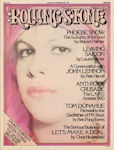
Phoebe Snow, most likely my favorite popular singer of all time, has died. Certainly, she’s the one I’ve loved and admired the longest (36 years!). As cotton is supposedly the “fabric of our lives,” just so Phoebe Snow has been interwoven throughout the warp and weave of my life’s musical tapestry — ever since her vocal energy rose above the relative mediocrity that was FM radio at the time and changed all that I knew about popular music.

A young Phoebe Snow

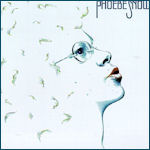
She was born Phoebe Laub to white Jewish parents in July 1950. (I make a point of saying “white” only because so many people assumed she was African-American. She wasn’t — but from an early age she immersed herself deeply in Gospel, Blues, Jazz, and R&B in ways that would affect her musical styles all her life.) She burst onto the scene as an accomplished singer-songwriter with a self-titled album at age 25, and it was clear from the very start that the power, range, agility, color and expression of her vocal style were as inimitable as they were unique.

That first album contained several great tracks (both her original songs and covers), but it was her iconic song “Poetry Man” that catapulted her to fame, climbing to number 5 on the Billboard Pop Chart and claiming number 1 on their Adult Contemporary list. Other of her songs from that album, notably “Harpo’s Blues” and “Either or Both,” were equally classic.

“Sometimes this face looks so funny that I hide it behind a book.
Sometimes this face has so much class that I have to sneak a second look!
What I want to know from you, when you hear my plea:
Do you like or love either or both of me?”

–Phoebe Snow from “Either or Both”

I was fortunate enough to see her in concert at Chapel Hill as part of her tour promoting that album, and it was an unforgettable experience, a vocal tour-de-force, a high-powered non-stop journey through styles and repertoire — the likes of which I have not witnessed since. She was phenomenal.

But almost as soon as her fame peaked, she withdrew from the limelight to take care of her baby daughter, born brain damaged and not expected to live. Throughout the ensuing years, a string of 14 albums came out at infrequent intervals, but she would never take herself away from her beloved Valerie Rose to do the touring and other requirements of “stardom.”
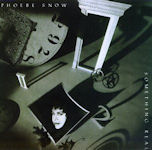
Those of us who adored her were constantly hungry to hear new things from her, and the albums (even without the live concerts) were wonderful offerings. The closest she came to equaling the “hit” status of her first album was in 1989, with the release of the gorgeously produced Something Real. Three mighty songs came from that album: the wistful-to-spine-tingling-in-under-4-minutes “If I Can Just Get Through the Night” (which reached number 13 on the Adult Contemporary chart), the yearning title track “Something Real” (it rose to number 29), and the atmospherically haunting “We Might Never Feel This Way Again.”

She appeared on albums of and sang duets with Paul Simon (“Gone At Last”), Bobby McFerrin (“You’ve Really Got a Hold On Me”), and Ladysmith Black Mambazo (“People Get Ready (There’s a Train a-Coming)”) – and we were thrilled. We even were happy to hear her singing the theme songs to Bill Cosby’s spin-off television show A Different World (“I know my parents love me; stand behind me come what may…”) and Rosanne Barr’s show, as well as various TV ad jingles that still make me want to buy Stauffer’s (“Nothing comes closer to home”), Hallmark, AT&T and even General Foods International Coffee (“Celebrate the moments of your life”).

For someone who wasn’t supposed to live beyond infancy, Valerie Rose surprised the world and lived a love-inspiring life (affirming the total efficacy and power of maternal devotion) until 2007, when she died at age 31. Phoebe’s constant, never questioned dedication to Valerie’s well being, became her own life — gladly and without reservation. Alluding to that, a dear friend of mine in Michigan wrote to me today, noting that “It says a lot about who she was.” Absolutely.

After a predictable period of intense grief, in 2008 and 2009 Phoebe (at the urging of friends) came back to music, resuming concerts, appearing on television, and planning for a new album in 2010. I’ve put some of her best performances and an interview with CBS Sunday Morning below, showing she was still in amazing voice and form. But she was not destined to see it come to fruition. In January of 2010 she suffered a massive stroke, and was invalided until her release to her rest this week.

Thanks for sharing in my catharsis here, and letting me pay my tribute. If you know Phoebe’s work, you’ll understand the genius I’ve been describing. If somehow you don’t, please consider this an invitation to get to know her great talent. I’ve put links below to some of her best performances for all who come to this page.

I invite you to mourn her passing with me by listening to this amazing Call to Faith she recorded with Ladysmith Black Mambazo:
(Seriously, be sure to listen to this with headphones, so you can get all that rich bass underlying the track!)


Some additional links to hear Phoebe Snow’s music:

Posted by: Dr. Grover B. Proctor, Jr. | 22 December 2010

The Oakwood Christmas Tour 2010


As anyone who knows me certainly understands by now, I am extremely proud of the culture and beauty of my hometown, Raleigh, NC.

Now that we have moved back here, Adrianne and I have had a thoroughly delightful time re-visiting and re-discovering so many of the things that we love about the area.

Here’s a video about one we went to 10 days ago. I think you’ll love seeing this part of Raleigh. (Hint: click on the icon in the lower right corner that makes it show Full Screen. The houses are more impressive that way!)

The mention the 1970’s plan to run “Downtown Boulevard” (now called Capital Boulevard) through Oakwood, thus destroying many of the homes. Well, the way I look at the plan, it might well have also destroyed the historic building that housed Mary Elizabeth Hospital, where yours truly was born. I’m SO glad they saved it all!!

Posted by: Dr. Grover B. Proctor, Jr. | 11 December 2010

Adrianne’s Calligraphy


Bounteous Thanksgiving

Adrianne's calligraphic wish for Thanksgiving, 2010

I just wanted to take this opportunity to share with you Adrianne’s beautiful calligraphy. She studied under the late Kathleen Davis, and now that we are back in North Carolina, she is taking up her pens and brushes once again!

Above is our family Thanksgiving card we sent out this year — our very first using Adrianne’s artistic talent.

Shown below are a series of calligraphed and illuminated envelopes she has recently done (displayed here minus the addresses, of course, for privacy reasons). Enjoy her beautiful work!

Donna Mills envelope
Ellen Holding envelope

Posted by: Dr. Grover B. Proctor, Jr. | 10 December 2010

FilmWatch: Dawn or Yawn?


The Voyage of the Dawn TreaderThe film The Chronicles of Narnia: The Voyage of the Dawn Treader gets its official American release today – in Digital 3D, no less.

Depending on which critics you believe, it’s either a very good attempt at returning to the first film’s magic and greatness (the film’s poster hopes/urges/demands that we “Return to Magic. Return to Hope. Return to Narnia”) – or it’s a horrible bore (one critic suggesting that it be renamed “Voyage of the Yawn Treader”). The film garnered a disappointing 54 (out of 100) Metacritic rating, meaning “mixed or average reviews.”

Not known as a great bastion of Christian writers or apologetics, The Washington Post nevertheless had this to say:

“After all, it isn’t every kid’s movie that wrestles with the subject of faith in a higher power, or sin, or the afterlife. And it isn’t every kid’s film that can do it so entertainingly. Sure, that’s heavy stuff if you’re looking for it. But it doesn’t spoil the great, great fun to be had in Narnia – or the magical spell it casts – if you’re not.”

The unapologetically Christian World Magazine’s Megan Basham (an insightful voice – if it’s possible for voices to have sight – in film criticism from a faith perspective) had this to say:

“As a newcomer to the series, director Michael Apted creates a Narnia that feels romantic and alive. From Eustace, Edmund, and Lucy’s swim through a painting, to the appearance of the ship, to the merry banter of its inhabitants, we believe in this fantastical world. And we continue doing so right up until the point the crew leaves the first of the Lone Islands. From there, the waters get a little choppy. As the Dawn Treader sails on to the Island of the Voices where Lucy discovers a magician’s spell book and meets the Dufflepuds, a plot line involving evil green smoke breaks some of the enchantment…. [Novelist C.S.] Lewis had the wisdom to impart morals with a sense of wit and depth. This green mist has neither. Thematically, nothing about it conflicts with the novel’s Christian subtext, but it feels like a didactic tack-on, which, of course, is exactly what it is…. Fortunately, by the time we sail into the sweet waters of Aslan’s country, things are back on track, and Christian audiences may be stunned and grateful to see how the filmmakers reveal the true nature of the great lion. His direct-from-Lewis explanation that he is in our world too and we must learn to know him by another name will be like a spring in the desert for thoughtful parents whose time is often spent in theaters enduring cheap bathroom jokes and even cheaper believe-in-yourself messages.”

Dawn Treader is rated PG for some frightening images and sequences of fantasy action.

Let’s hope the response to this one is good (and profitable) enough for them to start filming The Silver Chair.

Posted by: Dr. Grover B. Proctor, Jr. | 10 December 2010

FilmWatch: Beijing Taxi


I’m not sure of the quality of this documentary, but my guess it is a wonderful voyage inside and about one of my favorite cities in the world.


Beijing Taxi

Beijing Taxi

Scene from Beijing Taxi, shot from inside one

no Metacritic rating, yet

Beijing Taxi is a feature-length documentary that vividly portrays the ancient capital of China undergoing a profound transformation. The intimate lives of three taxi drivers are seen through a humanistic lens as they navigate a quickly morphing city, confronting modern issues and changing values. The three protagonists radiate a warm sense of humanity despite the struggles that each faces in adapting to new realities of life in the modern city. With stunning imagery of Beijing and a contemporary score rich in atmosphere, Beijing Taxi communicates a visceral sense of the common citizens’ persistent attempts to grasp the elusive. The 2008 Summer Olympic Games serve as the backdrop for Beijing Taxi‘s story, a coming out party for a rising nation and a metaphor for Chinese society and its struggles to reconcile enormous contradictions while adjusting to a new capitalist system that can seem foreign to some in the Communist-ruled and educated society. Candid and perceptive in its filming approach and highly cinematic and moody in style, Beijing Taxi takes us on a lyrical journey through fragments of a society riding the bumpy roads to modernization. Though its destination unknown, the drivers continue to forge ahead.

Not rated.

“The taxi driver is the globetrotter’s intelligence agent, always willing to provide a pithy sound bite or prescient analysis of what’s really wrong with the city he or she drives around in for a living. Miao Wang’s first feature-length documentary addresses the changes Beijing underwent in preparation for the 2008 Olympics through the viewpoint of three taxi drivers. The characters in the film are reality-television compelling, and Wang, who immigrated to the United States from China in 1990 and has lived here since, matches an outsiders fascination about everything with an emigrant’s appreciation for what Beijing is leaving behind in their embrace of modernity.” (Baltimore City Paper)

Beijing Taxi dips us under the mainstream media’s radar screen and places us in the seat of a journey through the capital of China: a lyrical, funny and at times bitter journey through the working lives of three Chinese who once were called the proletariat but today are not quite sure what they should be called. In varying degrees, according to generation, they struggle to become comfortable in the new Chinese society where competition is good and getting rich is patriotic.” (The Huffington Post, Stewart Nusbaumer)

“Among [the three taxi drivers featured is] Bai Jiwen, a weathered veteran of both Mao and the birth of Chinese capitalism who is due to retire in six years. With a plainspoken honesty that would have been impossible (and punishable) during the Cultural Revolution, he explains that while Western-style capitalism has benefited many in China’s premier city, it has also opened the doors for the sort of extreme poverty that was unthinkable under the late chairman.” (The Austin Chronicle, Marc Savlov)

“[Director Miao] Wang has a gift for defamiliarization, transforming the everyday into something beguiling: the play of water and soap across a windshield at a carwash, the bright whirl of pinwheels, a child’s lacquered fingernails, the clatter of pop music and traffic in a city at a night. There is an element of travelogue to how the film seeks to capture Beijing itself, lingering over its contradictory elements. We’re dazzled by the bright reds of a pile of buttons emblazoned with the profile of Mao Zedong in one moment and by a bright red Coca Cola advertisement in another; we see ancient architecture and gleaming images of American movie stars presiding over the same metropolis. . . . [She] offers us a valuable document of an important time in China’s history, and she allows us to see her native country – too often stereotyped or ignored in the American media – through the eyes of a compassionate, meticulous artist.” (Not Coming to a Theater Near You, Victoria Large)

Posted by: Dr. Grover B. Proctor, Jr. | 6 December 2010

FilmWatch: Jackie Chan is Back!


In case anyone was wondering if Jackie Chan was going to slip into the gray area of retired action heroes and never be heard from again — or worse yet, be seen only in an increasingly embarrassing array of “over-the-hill-hero” types — then wonder no more. 2010 brought the film that many critics (people who really know how great Jackie Chan and his film library are, and how much more than an kung fu hero he is!) are raving about:

Little Big Soldier

“Now [Jackie Chan]’s finally made a movie that stands proudly alongside his greatest films. A movie that any Jackie Chan fan can show to an unbeliever and say, ‘There! That’s why this man is great.’ It’s his best film since 1994’s Drunken Master II, and it sees him finally come to terms with his place in the Chinese film industry, his aging body, his legacy as an action star and even China’s place in the world…. There have always been better martial artists, better stuntmen and better daredevils than Jackie Chan, but what makes him great is his timing and his mastery of physical comedy and here they’re both in full effect. He abandons massive stunts for down-to-earth, small-scale acrobatics and, unable to rely on the spectacle of risking his life to wow the audience, he’s found greatness again. In a dizzying display of self-awareness, Jackie has made a movie whose message is ‘Change, or die.’ Fortunately, for his fans, Little Big Soldier represents the joyous fact that at 56 years old, Jackie has chosen ‘change’.” (New York Asian Film Festival)

“Chan’s achieved some recent multiplex redemption instructing Jaden Smith in the ways of kung fu and honorable living in The Karate Kid, but it’s his other new film, the China/Hong Kong coproduction Little Big Soldier, that showcases he’s absolutely capable of carrying a movie on the strength of his beaming, unpretentious charisma. (And, okay, occasional and more restrained feats of acrobatics.) Chan’s never going to be the most nuanced of actors, but he can be an immensely engaging leading man, capitalizing on that almost silent comedy-inspired charm he’s made his own.” (Allison Willmore, IFC: The Independent Eye)

“It is a delight to witness Mr. Chan in full flight. Rarely do we see this side of Jackie and somehow we never doubted at the back of our mind. Whereas, Chan usually plays one-dimensional characters as a cop, spy, agent, cop and cop. Chan is given a character and by the end of the movie, I felt that Chan had succeeded in bringing the character of the old soldier back to life. This is not an understatement, but rather a real sense of achievement …. There are moments in the film, where the audience laughs with Chan, escape with Chan, and ultimately feel for Chan. Now that’s something is that unheard of and missing for the last 40 years of this great man’s career!” (HKNFO Reviews)

Good luck on finding anywhere to see this in America, short of a few forward-thinking film festivals. If you’re willing to invest the price of a cinema ticket, you can own the film direct from Hong Kong. $7 buys it until 7 December 2010 (after that it reverts to original price) from HK Flix.

Posted by: Dr. Grover B. Proctor, Jr. | 3 December 2010

FilmWatch: Kings & Swans


Here’s my FilmWatch information on two newly released arts-related films: communication arts and dance. Enjoy the end-of-year film-fest!


The King’s Speech

Colin Firth in "The King's Speech"

84 Metacritic rating (out of 100)
Tells the story of the man who became King George VI (Colin Firth), the father of Queen Elizabeth II. After his brother abdicates, George (‘Bertie’) reluctantly assumes the throne. Plagued by a dreaded stutter and considered unfit to be king, Bertie engages the help of an unorthodox speech therapist named Lionel Logue (Geoffrey Rush). Through a set of unexpected techniques, and as a result of an unlikely friendship, Bertie is able to find his voice and boldly lead the country into war.
Rated R for some language.
“Its great distinction grows out of dramatic inventions and dazzling wit. The King’s Speech is a captivating fable of egalitarianism, a battle royal between social unequals that turns the combatants into cherished friends.” (Wall Street Journal, Joe Morgenstern)
“Let’s say it without equivocation: Colin Firth deserves an Oscar for his lead role in The King’s Speech as the stammering King George VI.” (USA Today, Claudia Puig)


Black Swan

Natalie Portman in "Black Swan"

76 Metacritic rating (out of 100)
Nina (Natalie Portman) is a ballerina in a New York City ballet company whose life, like all those in her profession, is completely consumed with dance. She lives with her obsessive former ballerina mother Erica who exerts a suffocating control over her. When artistic director Thomas Leroy decides to replace prima ballerina Beth MacIntyre for the opening production of their new season, Swan Lake, Nina is his first choice. But Nina has competition: a new dancer, Lily, who impresses Leroy as well. Swan Lake requires a dancer who can play both the White Swan with innocence and grace, and the Black Swan, who represents guile and sensuality. Nina fits the White Swan role perfectly but Lily is the personification of the Black Swan. As the two young dancers expand their rivalry into a twisted friendship, Nina begins to get more in touch with her dark side — a recklessness that threatens to destroy her.
Rated R for strong sexual content, disturbing violent images, language and some drug use.
“[Director] Aronofsky blurs the line between reality and fantasy, turning the film into a gothic horror show that is fascinating and disappointing in equal measure. What’s resplendently real, though, is the beauty of Ms. Portman’s performance. She makes the whole lurid tale worthwhile.”  (Wall Street Journal, Joe Morgenstern)
“A full-bore melodrama, told with passionate intensity, gloriously and darkly absurd. It centers on a performance by Natalie Portman that is nothing short of heroic.” (Chicago Sun-Times, Roger Ebert)


Metacritic’s proprietary Metascore carefully curates a large group of the world’s most respected critics, assigns scores to their reviews, and computes a weighted average to summarize the range of their opinions. The result is a single number that captures the essence of critical opinion in one Metascore.
Metascores, which range from 0-100 (with higher scores indicating better overall reviews), are computed only when they have collected at least four critics’ reviews. Metascores may be thought of as falling into the following categories:

81 100 Universal Acclaim
61 80 Generally Favorable Reviews
40 60 Mixed or Average Reviews
20 39 Generally Unfavorable Reviews
0 19 Overwhelming Dislike
Posted by: Dr. Grover B. Proctor, Jr. | 1 November 2010

Walking Among 40 Voices


If you plan to be anywhere near New York City between now and November 13, I would strongly encourage you to see an amazing musical-art installation at the Time Warner Center, near Lincoln Center and Columbus Circle.

Janet Cardiff's installation “The Forty-Part Motet”

Janet Cardiff’s installation “The Forty-Part Motet”

Artist Janet Cardiff’s 2006 installation called “The Forty-Part Motet” is being temporarily resurrected. As you can see in the attached photo, she has placed 40 speakers in a circle, each one projecting 1 of 40 singers performing Thomas Tallis’ 16-century polyphonic masterpiece Spem in alium.

We usually think of “full choral” works as having 4 (SATB) or maybe 5 (SSATB) parts. This work, mammoth in its unprecedented 40 parts (8 choirs of 5 voices each, SATBarB), stands as one of the pinnacles of Western choral music. (Legend has it that it was written for the birth of Elizabeth I, though there appears to be no confirmation of that.)

Adrianne and I had the great fortune of hearing Spem in alium with a forty-voice choir at the Salisbury Festival inside gorgeous, reverberant Salisbury Cathedral some years back. Talk about a thrilling, mesmerizing, overwhelming, reverential, goose-bump-producing experience!

Well, in Ms. Cardiff’s installation, you can literally walk through the “choir” and listen to the amazing counterpoint of voices, phrases, and lines. So amazing is the impact, apparently, that almost five years after its 3-month run at its first home, NYC’s Museum of Modern Art, people still come in and ask to see it.

If you’ve never heard the short 10-minute piece, and even though NO recording can ever come close to capturing the effect of hearing this piece “live,” you can listen below (earphones recommended, and be sure to keep listening to the final 1 minute’s amazing line-upon-line coda).

I wish I were in New York this week!!!

(Taverner Consort and Choir, Andrew Parrott, directing)


Posted by: Dr. Grover B. Proctor, Jr. | 29 October 2010

“The game, Mrs. Hudson, is on!”


PBS' Masterpiece Mystery! presentation of "Sherlock"
Episode 2 (“The Blind Banker”) of the new PBS Masterpiece Mystery series Sherlock airs this Sunday night.

When I suddenly discovered (during the opening credits of Ep. 1) that this incarnation of the Great Detective was set in 21st century London, I was taken aback –- and I then slipped into a funk. Malodorous visions roiled of past wholly inappropriate re-settings, such as Mozart operas moved to the Roaring Twenties, or Shakespeare in the Third Reich. (shudder)

But then something wonderful happened.

I realized the creators of Sherlock were doing two things right. First, they were clearly having fun with the genre. And let’s face it, part of the appealing ethos of Holmes is having twinkle-in-the-eye fun with him! It’s part of what made Jeremy Brett so perfect.

And second, they clearly set out to do a respectful (if slightly tongue in cheek) homage. “A Study in Scarlet” becomes “A Study in Pink.” Dr. Watson still returns home from the “Afghan campaign” (plus ça change…), but instead of his memoirs, he writes a blog. Holmes texts taunts to Lestrade, and informs Watson it’s “a three-patch problem.” O, bravi, Messrs. Gatiss and Moffat! “The game, Mrs. Hudson, is on!”

I soon realized the writing was intelligent and articulate, with witty bantering and quick come-backs (“I’m not a psychopath, Anderson. I’m a high-functioning sociopath. Do your research.”).

And finally, I became engaged with the “modern” characters, appropriately drawn for their setting — and particularly with the interplay between the two main actors, Benedict Timothy Carlton Cumberbatch (I swear that’s his real name; he played William Pitt in Amazing Grace and was the voice of Stephen Hawking in the Discovery Channel’s Into the Universe) and Martin Freeman (don’t know his full name, but what a resume: Arthur Dent in The Hitchhiker’s Guide, the comedic gems Love Actually and UK’s The Office, and he’ll be Bilbo Baggins in The Hobbit due out in 2012!).

So… against all odds… I really like it (at least after one episode)!

There’s much valuable exposition and background in the first episode, so if I were you, I’d watch them in order. DVR Alert (for those in NC): WUNC-TV is replaying Episode 1 at 2:00 am (!!) tomorrow (Saturday) morning. Also, through 7 December 2010, you can watch the three episodes of Series I here.

Posted by: Dr. Grover B. Proctor, Jr. | 19 July 2010

Adrianne, After All, Is Usually Right


Earlier this week, my wife Adrianne asked what I had heard about the film Please Give. I told her I had not read much about it, but was aware that the critics had generally liked it.

She said, “I think we may have to see it.”

Immediately, red flashers and alarm bells began to go off in my head. No, it wasn’t a stroke. It was merely my memory reminding me that Adrianne’s track record for dramatic picks is nearly impeccable.

Il Postino, Proof, Pride & Prejudice

Il Postino, Proof, Pride & Prejudice

Her successes include her taking me to the film Il Postino (against my will) and the play Proof (to which I acquiesced only after I found out it was a play about math). As it turned out, both of these had impacts on me far in excess of any others I’ve ever seen. And when she convinced me to go with her to the 2005 re-make of Pride & Prejudice (the one with Keira Knightley and the exquisite musical soundtrack by Dario Marianelli), I was transfixed by a superb, virtually inerrant film.

So, as is my wont, I immediately began to research Please Give, and (surprise, surprise) it looks like she may have picked a winner yet again.

The critics were, indeed, mostly positive. Joe Morgenstern called it “perilously close to perfection,” and you can read a few others and see the trailer below. But there were a few naysayers. The New York Post said, “It’s shallow. Or maybe it’s deeply shallow.” And Rex Reed questioned, “At a time when every penny counts, where do they come up with the money to finance a movie this boring?” (To which I would add the question, how long has it been since we paid any attention to Rex Reed anyway?)

So almost certainly we will see Please Give this weekend. I’ll let you know if I side more with Morgenstern or with Reed.

Please Give

Catherine Keener and Oliver Platt in the film Please Give

Catherine Keener and Oliver Platt

METACRITIC RATING: 78 ( Generally Favorable Reviews )

Genre: Comedy
Directed by: Nicole Holofcener
Starring: Catherine Keener, Amanda Peet, Oliver Platt
Running Time: 90 minutes
Rating: R for language, some sexual content and nudity

Kate has a lot on her mind. There’s the ethics problem of buying furniture on the cheap at estate sales and marking it up at her trendy Manhattan store. There’s the materialism problem of not wanting her teenage daughter to want the expensive things that Kate wants. There’s the marriage problem of sharing a partnership in parenting, business, and life with her husband Alex but sensing doubt nibbling at the foundations. And there’s Kate’s free-floating 21st century malaise — the problem of how to live well and be a good person when poverty, homelessness, and sadness are always right outside the door. Plus, there’s the neighbors: cranky, elderly Andra and the two granddaughters who look after her. As Kate, Alex, and Abby interact with the people next door, with each other, and with their New York surroundings, a complex mix of animosity, friendship, deception, guilt, and love plays out with both sharp humor and pathos. (Sony Pictures Classics)

Wall Street Journal Joe Morgenstern (rating: 100): This gorgeous film, always tender and sometimes dark, is a deeply resonant comic drama that’s concerned with nothing less than life, death, love, sex, guilt and the urban logic of mortality. (Read Morgenstern’s complete glowing review here.)

Chicago Sun-Times Roger Ebert (rating: 88):The movie is about imperfect characters in a difficult world, who mostly do the best they can under the circumstances, but not always. Do you realize what a revolutionary approach that is for a movie these days?

USA Today Claudia Puig (rating: 88):Sometimes — and far too rarely — a film will hit all the right notes, with sharp, original dialogue, brilliant casting and an absorbing story. So caught up in its spell, you dread seeing the credits roll. Please Give is that movie.

« Newer Posts - Older Posts »

Categories